Weber Seat Mechanics - They Are Built To Last
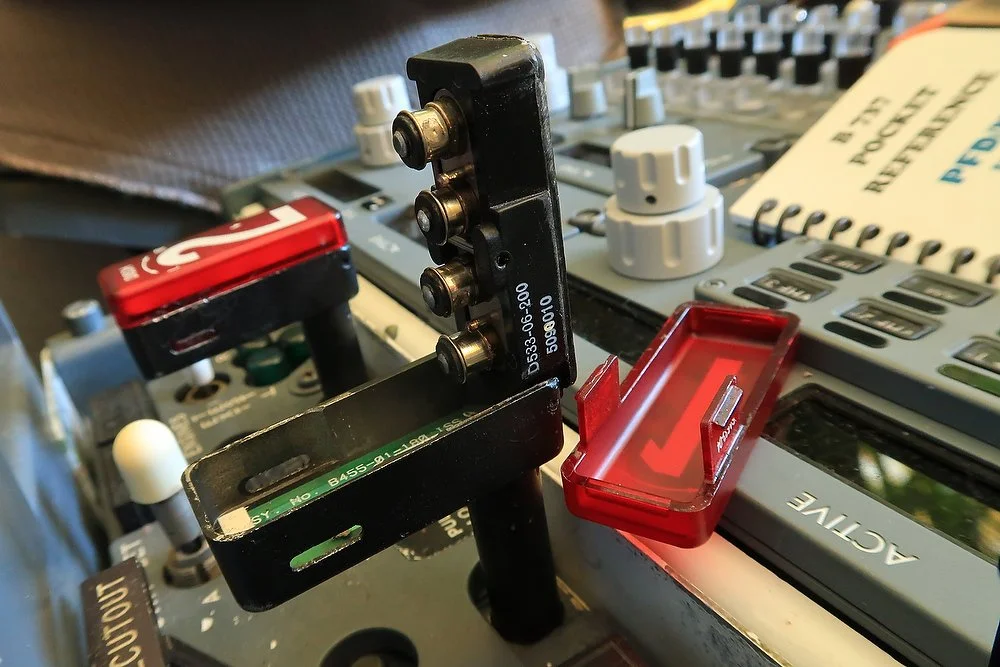
/The under seat workings of the Weber seat: Heavy duty chassis, the smaller of two heavy duty springs, two of three cables and the cylindrical hydraulic/pneumatic cylinder
In a earlier journal post (Weber Captain & First Officer Pilot Seats), I discussed the purchase of two Weber pilot seats. What I didn’t discuss was how these seats function. Weber seats, although constructed from aircraft rated aluminium are not light in weight; each seat weighs approximately 40 kilograms. Most of the weight is associated with the robustly constructed underside the seat.
The seat has four movements:
Forward and aft movement;
Vertical rise;
Recline of back rest; and,
Under leg rise & fall.
Mechanics
Each movement is initiated by moving one of three solid lever on the pedestal side of the seat. The lever operates a push style button connected to the end of a cable. As the lever is moved the button is pressed or released with a corresponding press and release from another button at the opposite end of the cable. The compression needed to allow these movements is controlled is by a very heavily constructed tensile spring that is contained within a cylinder. This in turn is connected to a hydraulic/pneumatic piston that allows for greater ease in movement.
The mechanics control the subtle movement of the rear seat recline (like in an automobile) and the under leg rise and fall of the portion of the seat, that can be raised under the calves to allow more or less reach to the rudder pedals. When the desired position is reached and the lever released, a heavy duty ratchet / cog is engaged locking the position in place.
The two most aggressive movements of the seat are the forward and aft movement of the seat and the vertical rise. This and the non use of J rails are two reasons that Weber Seats are attached to the flightdeck floor by 16 attachment bolt points by eight claw feet (duck feet) for each seat.
Weber manufactures a number of different variants: hydraulic, electric, spring or a combination thereof – there are several variations in use throughout aircraft fleets. The seats I am using are spring and hydraulic controlled.